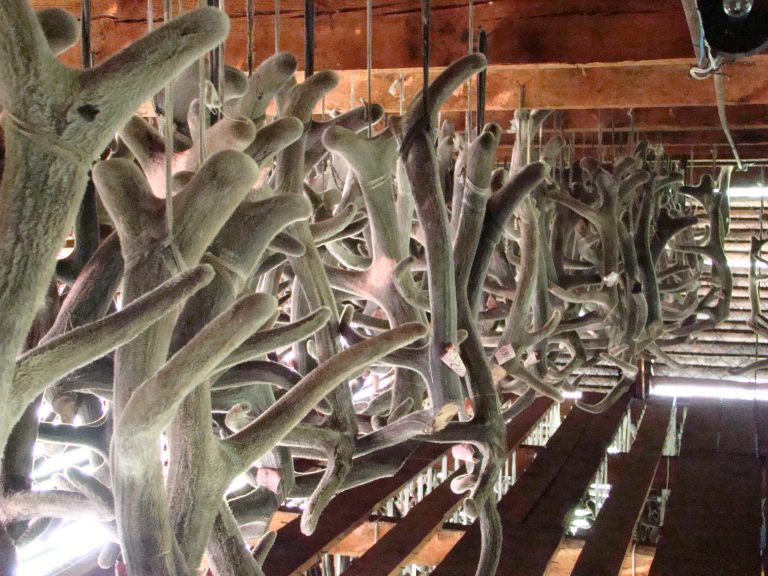
Ginseng and deer velvet antler are two legendary adaptogens with millennia of use in Asian traditional medicine. Both are included in the Chinese Pharmacopoeia. But they work differently and are optimal for different situations.
Comprehensive Comparison
| Parameter | Deer Velvet Antler | Ginseng |
|---|---|---|
| Origin | Animal (maral deer antlers) | Plant (Panax ginseng root) |
| Active compounds | 400+ (peptides, growth factors, amino acids) | ~200 (ginsenosides, polysaccharides) |
| Growth factors | Yes (IGF-1, EGF, NGF) | No |
| Chondroprotection | Yes | No |
| Heme iron | Yes | No |
| Cognitive support | Moderate | Strong (ginsenosides) |
| Energy boost | Moderate, sustained | Strong, rapid |
| Joint support | Strong | Minimal |
| Muscle recovery | Strong (BCAAs, IGF-1) | Mild |
| Beauty (skin, hair) | Strong (collagen, HA, EGF) | Mild |
When to Choose Antler
- You need comprehensive support (joints + muscles + immunity + skin)
- You’re an athlete (recovery, chondroprotection, muscle growth)
- You have joint problems
- You need iron replenishment
- You want anti-aging benefits
When to Choose Ginseng
- Your primary goal is cognitive performance
- You need a quick energy boost
- Budget is a primary concern
- You prefer plant-based products
The Ideal Combination
Antler + ginseng is a classic pairing in traditional Chinese medicine (“Lu Rong + Ren Shen”). The animal adaptogen provides structural components (growth factors, chondroprotectors), while the plant adaptogen enhances cognitive and tonic effects.
In traditional Chinese medicine, deer antler (Lu Rong) and ginseng (Ren Shen) are considered the two most powerful tonics. Antler “builds the body” (structural support), while ginseng “awakens the mind” (cognitive and energy). Together, they form a complete adaptogenic system.
Nature’s most complete adaptogen — deer velvet antler by Miles Bio.